


The Unseen Forces Behind Field Goal Fails


You're watching your favorite team (FINS UP!) play their hearts out. It's the fourth quarter. 3 seconds left on the clock. The kicker lines up his shot and... DOINK. He hits the goal post and with that, months' worth of work, the season is over. Initially, fans are heartbroken, but on social media, people are outraged. Even Ninja said, “I’ll never understand how college and NFL football teams allow kickers that just... miss... kicks. I feel like there has to be pools of kickers in the USA that won’t miss simple kicks. Or snappers that won’t mess up the snaps idk man it seems so SILLY.”
Beyond the silly message, Ninja makes a good point. Why DO kickers miss? Let's break down the physics.
The act of kicking a field goal is anything but simple. It's a precise ballet of biomechanics and physics, where everything must align perfectly: the kicker's approach, the snap, the hold, and, of course, the kick itself.
It starts with the snap. The football must be snapped and placed perfectly. A slight deviation can throw off the entire operation, akin to hitting a moving target.
Enter the wind. Even a gentle breeze can alter the ball’s path. Kickers must account for wind speed and direction, making real-time adjustments.
The psychological aspect can’t be understated. Imagine thousands of eyes on you, millions more through screens, all expecting perfection. This pressure can tweak a kicker's technique, causing a rush or an altered motion, leading to a miss.
When the foot connects with the ball, several physics principles come into play. The ideal contact point, the angle of the kick, the force applied, and the spin of the ball all influence its flight path. To maximize the distance traveled of a projectile, an object must be launched at a 45 degree angle. But depending on the weather conditions and the location on the field, kickers must determine at what angle they must kick at to make sure the ball goes in. The ball follows a parabolic trajectory, influenced by gravity and initial velocity. Precision in angle and force is critical for optimizing this trajectory for distance and accuracy.
The Magnus Effect
There is also another peculiar effect in action when a kicker attempts a field goal. The Magnus Effect!

Imagine a football spinning through the air. As it spins, it rubs against the air, sort of like your hands rubbing together. This rubbing action drags some air along with the ball. Now, the air on one side of the ball gets bunched up, because it's being pushed there by the spin. This bunched-up air is like a crowd of people in a room; it's packed and heavy. That's high pressure.
On the other side, the spinning ball is sort of throwing the air away, making that side less crowded with air. It's lighter and has room to breathe. That's low pressure.
Nature likes balance and doesn't like this difference, so it pushes the ball from the high-pressure side to the low-pressure side. That push is the Magnus effect. It's not a gentle nudge, but a strong shove that can really make the ball curve.
In a game, kickers usually want the ball to fly straight to hit those goalposts. So, they try to kick the ball in a way that it spins back toward them but stays on a straight path. But sometimes, especially in tricky plays, they might make the ball spin sideways to make it curve on purpose. It's all about control and knowing just how the ball will dance with the air it spins through.
Drag
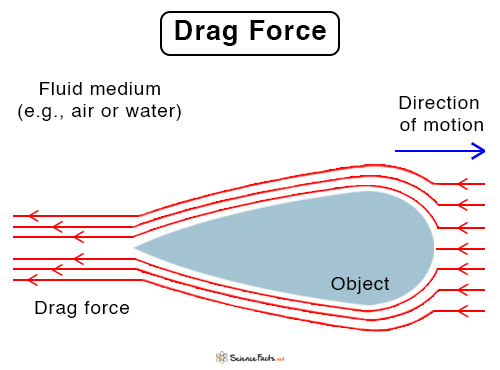
Air resistance, also known as drag, is a force that pushes against anything that moves through the air. The faster something moves, the stronger the pushback from air resistance.
Now, the football has a certain size and shape, and as it moves, it has to push air out of the way. How much air it has to push depends on how big the front part of the football is—that's its surface area. A bigger surface area means more air to push, and that means more resistance.

So, when a kicker boots the ball hard for a long field goal, they're fighting against this force. The harder the kick, the faster the ball goes, and the more the air pushes back. That's why long kicks are tough; they need enough oomph to not only get the distance but to fight against the extra drag from all that speed.
Torque and Angular Momentum

Alright, let's talk about what happens when a football is kicked off-center, causing it to spin.
Imagine kicking the lower side of the football just a bit to the side instead of straight on. That kick isn't just going to push the ball forward; it's also going to make it rotate. This twist is because of something called torque. Torque is a measure of force. It's what you use to open a jar or turn a doorknob. In the case of the football, when the kicker's foot hits the ball off-center, it applies a force that doesn't go straight through the ball's middle. This off-center force is the torque, and it gives the ball a spin.
Once the ball starts spinning, it keeps spinning. That's due to something called angular momentum. Angular momentum is like regular momentum, which keeps an object moving forward. But angular momentum keeps an object spinning. It's a measure of how much rotation the object has and how hard it would be to stop it from spinning.
The spin (or angular momentum) affects the ball’s flight in a couple of ways:
Stability: Just like a spinning top stays upright, a spinning football is more stable in the air. That's why a well-kicked ball that spirals looks so smooth flying through the air.
Direction: Remember that torque? If the ball has been kicked so it's spinning around its longer axis, it will tend to travel in a straight line. But if the ball is spinning around a different axis (say, wobbling), it might not go where the kicker wants it to.
So, when a football is kicked off-center and spins, it's all about the torque that started the spin and the angular momentum that keeps it spinning. That spin can be the difference between a tight, accurate pass and a wobbly, unpredictable one.
So, when a kicker boots the ball hard for a long field goal, they're fighting against this force. The harder the kick, the faster the ball goes, and the more the air pushes back. That's why long kicks are tough; they need enough oomph to not only get the distance but to fight against the extra drag from all that speed.
In Defense of Kickers
Considering snap accuracy, wind conditions, psychological pressure, and physics' complexity, it's remarkable field goals are ever successful. Each kick is a unique event with its own set of challenges. Even the best kickers can miss when one factor is off.
So, let’s not lament the missed kicks too harshly. We must remember the intricate dance of physics, physiology, and psychology that each kick represents. Next time a kicker lines up, remember the forces at play. It might just change how we view those heartbreaking moments.


Comments