


Exploring the Fluid Dynamics of Swimming: A Detailed Scientific Analysis

Swimming is not just an art form and a means of exercise but also a complex interaction between human physiology and the laws of fluid dynamics. To understand how swimmers achieve speed and efficiency in the water, one must delve deep into the principles of fluid mechanics that govern their movement. This blog post provides an in-depth exploration of these principles, explaining how swimmers can optimize their performance through an understanding of water dynamics.
The Basics of Fluid Dynamics in Swimming
Fluid dynamics, a sub-discipline of fluid mechanics, deals with the behavior of liquids and gases in motion. When applied to swimming, it involves understanding how the swimmer's body interacts with the water, focusing on resistance, propulsion, and lift.
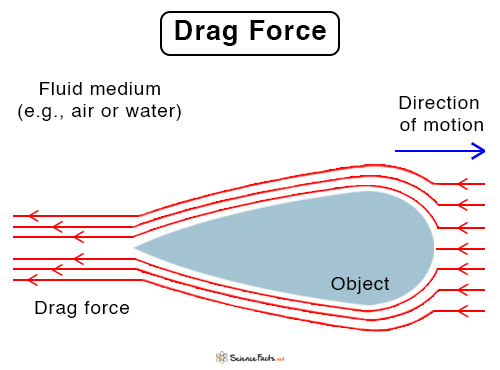
Pressure Drag: Also known as form drag, pressure drag arises due to the shape of the object moving through the fluid. In swimming, this type of drag occurs because the body creates a high-pressure zone at the front and a low-pressure wake behind. Streamlining the body's shape and adopting positions that minimize the frontal area can significantly reduce pressure drag.
Wave Drag: At the surface of the water, swimmers must also contend with wave drag, which occurs from waves created by the body moving through the water. Minimizing wave creation, especially at higher speeds, is crucial for efficient swimming.
Viscous Drag: When a swimmer moves through water, they experience viscous drag, a type of friction that occurs between the swimmer’s body and the water. This drag force acts opposite to the direction of the swimmer’s motion and increases with the velocity of the swimmer. It is largely influenced by the swimmer's technique and the surface area of the body that is exposed to the water.
Propulsion Mechanics in Swimming
Swimmers generate propulsion through the effective use of their arms and legs, which act like paddles pushing against the water. This section explores the forces involved in this motion.
Lift-Based and Drag-Based Propulsion: Swimmers use a combination of lift-based and drag-based propulsion. Lift-based propulsion is similar to how airplane wings generate lift, using the Bernoulli principle where an increase in fluid speed occurs simultaneously with a decrease in pressure. In swimming, when a swimmer’s hand moves through the water at an angle, it creates differential pressure that produces lift, propelling the swimmer forward. Drag-based propulsion involves pulling and pushing against the water directly.
Stroke Efficiency: The efficiency of each stroke in swimming is heavily dependent on the angle of attack (the angle between the limb and the flow of water), stroke rate, and the swimmer’s ability to maintain effective hand and foot positions. The swimmer must balance these factors to maximize forward thrust while minimizing the energy expended.

The Role of Turbulence
Boundary Layer: The boundary layer is a thin layer of fluid close to the body where the fluid velocity changes from zero at the body surface to the free stream velocity of the surrounding fluid. Managing this boundary layer through smooth body movements and suit technology (like shark-skin suits) can reduce drag significantly.
Turbulent vs. Laminar Flow: The nature of the flow around the swimmer’s body also affects performance. Laminar flow, which is smooth and orderly, transitions to turbulent flow, which is chaotic and mixed, at higher speeds and around complex body shapes. Swimmers aim to maintain laminar flow as much as possible to reduce drag.
The Impact of Swimmer's Position and Technique
The swimmer’s body position significantly impacts the interaction with water. A streamlined position reduces the cross-sectional area exposed to the flow, thus reducing all forms of drag. Techniques like the dolphin kick or the flutter kick are designed to maximize propulsion while maintaining a streamlined posture.
Conclusion
Understanding the fluid dynamics involved in swimming allows swimmers and coaches to refine techniques, enhance performance, and develop training programs that focus on hydrodynamic efficiency. From minimizing drag to maximizing propulsion, the science of fluid dynamics provides critical insights into how swimmers can move faster and more effectively through water. This scientific approach transforms swimming from mere movement to an optimized interaction with the fluid environment.


Comments